Editorial scope note: Wild Ace builds this guide from public plan pages, official help pages, catalogue positioning, and reader use cases. We do not claim private access, hidden usage data, or guaranteed availability. Prices, libraries, trials, and rights can change, so use the official links below before you buy.
Quick verdict
MUBI is not built for viewers who want the largest possible catalogue. It is built for viewers who want a reason to watch something more interesting tonight. If that sounds like your problem, MUBI can be a strong specialist add-on. If your household mostly wants comfort TV, sport, children's viewing, or franchise catch-up, a broader service will feel more useful.
MUBI should be judged as a curated film service, not as a replacement for a broad household streamer. It earns money when you want programming taste, discovery, and a narrower shelf of films chosen with a point of view. It disappoints when it is forced to become nightly comfort television.
This is a UK review. Film rights move quickly, so the official MUBI UK page and the current app catalogue should be checked before subscribing for a specific title.
Official pages checked
We started from official pages because affiliate roundups go stale quickly when plan names, free trials, and cancellation terms change. The links below are not decorative citations. They are the pages a reader should open before paying, especially where a service uses regional pricing or changes its included hours.
- MUBI - official MUBI site
- MUBI Help - official support and account help
- BFI Player subscription - official specialist alternative for UK film viewers
- MUBI Notebook - MUBI editorial and film culture publication
Use those pages to confirm current prices, included catalogues, trial rules, device limits, and cancellation terms. We avoid quoting a permanent price when a service displays pricing dynamically or changes promotions frequently. A good deal is only good if the current checkout page matches the use case you actually have.
How Wild Ace judges this choice
A fair MUBI review has to judge curation rather than volume. The question is not whether MUBI has everything. It is whether the service consistently puts worthwhile films in front of the kind of viewer who wants to be led by programming.
- Programming identity - The service needs to feel deliberately selected rather than randomly stocked.
- UK availability - Always check the UK catalogue and current membership page before subscribing.
- Viewing discipline - A curated service works when you actually watch from the queue rather than browse endlessly.
- Specialist role - MUBI should be treated as a film add-on, not a full replacement for broad streaming.
- Cancellation timing - The best value often comes from focused months around retrospectives, releases, or personal film projects.
For MUBI, we give more weight to editorial confidence and watchlist momentum than to broad catalogue volume. The service is strongest when its current programming makes the next film feel chosen rather than random.
Shortlist table
| Option | Best for | Watch before paying | Wild Ace read |
|---|---|---|---|
| Who MUBI suits | film viewers who want curated international discovery | the service can feel narrow if you want mainstream TV every night | Strong fit for film-first subscribers. |
| Who should skip | viewers who need broad household entertainment | subscription value falls if only one person uses it occasionally | Skip unless film discovery is a clear habit. |
| Best pairing | MUBI plus one broad streamer | two specialist services at once can be too narrow | Pair it with breadth, not another unused niche plan. |
| Best month to join | when at least three current films or themes interest you | joining without a queue leads to idle browsing | Subscribe around a film project. |
| Physical-media alternative | films you know you will revisit or study | do not buy every discovery on disc immediately | Use MUBI to discover, then buy selectively. |
Read the table as a use-case check. MUBI should have a visible role in the month: a current series of films, a director interest, or a deliberate discovery habit.
Notes on the main options
Film discovery month
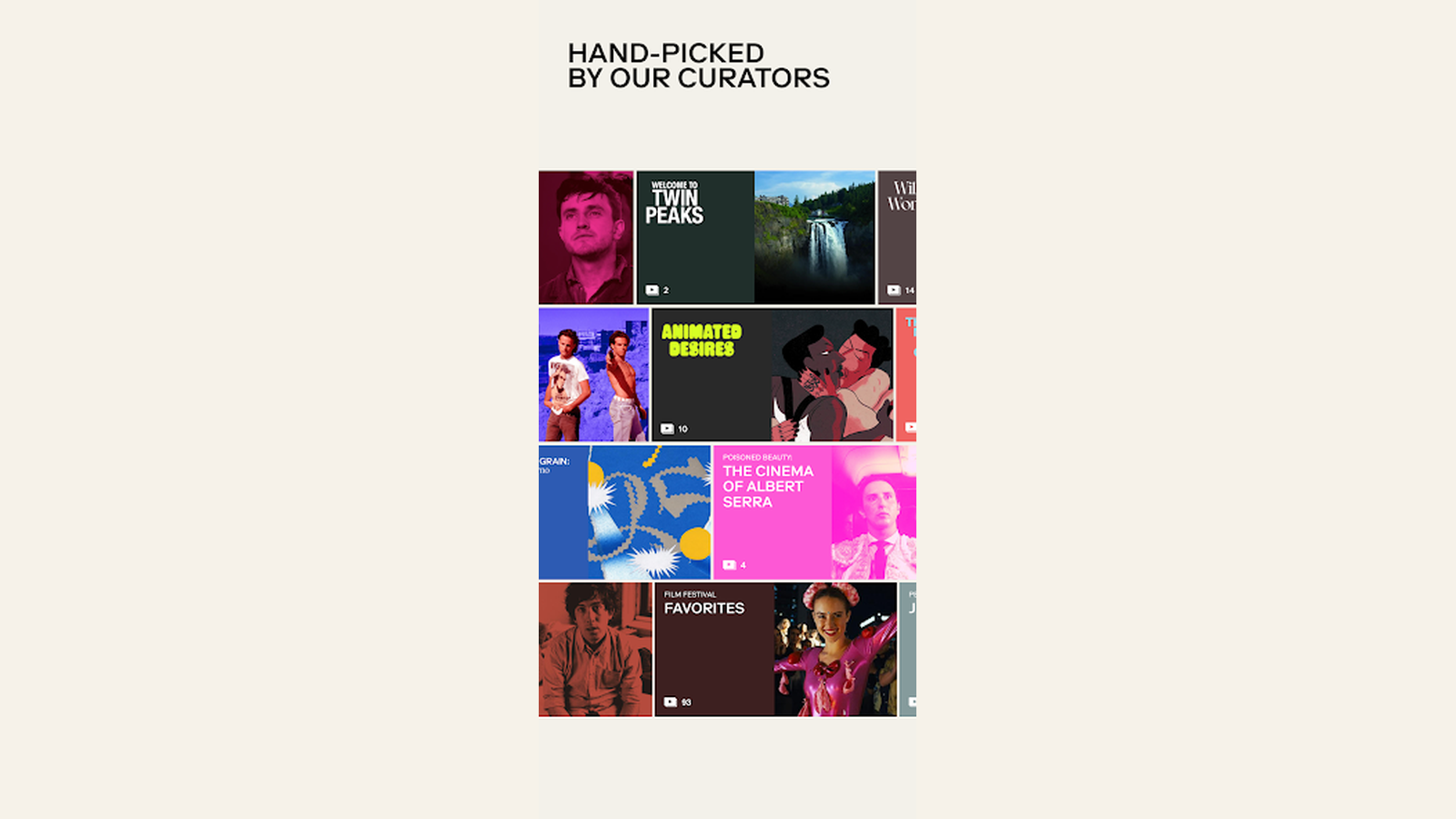
MUBI is strongest when the viewer wants to be guided. It is not trying to show every famous film at once; it is trying to make the next film feel selected. That can be valuable for viewers who want international cinema, festival-adjacent releases, retrospectives, and a sense of editorial rhythm. The service is weakest when the viewer expects a familiar comfort library. Join when the current programme sparks curiosity, not when the household simply needs another TV app.
Broad household viewing
A household that mostly wants mainstream series, children's favourites, franchise back catalogues, reality TV, or nightly comfort viewing should not ask MUBI to do that job. It can sit beside a broad streamer, but it should not be blamed for being narrower than Netflix or Disney+. The question is whether at least one person will use MUBI deliberately each week. If not, the money is probably better spent on a broader service or paused until a stronger film month appears.
Pair with a broad streamer
MUBI often makes most sense as the specialist lane beside one broad service. The broad service handles family viewing and background entertainment; MUBI handles the film nights where curation matters. This pairing can be excellent if both roles are clear. It becomes wasteful when the broad service already satisfies the household and MUBI is kept open only because the brand feels tasteful. The watchlist should prove the need.
When to join
The best moment to join is when the current slate intersects with an interest: a director, country, movement, festival season, distributor focus, or new release. A viewer should be able to name several films or at least a theme before paying. Joining without a watchlist turns curation into idle scrolling. MUBI works best when the viewer arrives ready to be surprised but not completely directionless.
Disc buyer overlap
MUBI can also help collectors decide what deserves shelf space. Renting or streaming a film first is often healthier than buying a collector edition on reputation alone. If a MUBI discovery becomes something you want to revisit, study, or show others, a disc purchase may make sense later. Treat the subscription as a discovery lane and the disc shelf as the long-term archive.
A cleaner buying plan
- Open the current programme - Do not subscribe from reputation alone; look at what is available now.
- Choose three films - Make the first month concrete by naming the first three watches.
- Pair with one broad streamer - Let the broad service handle household use and MUBI handle discovery.
- Set a one-month review - If the curation is not pulling you in, cancel cleanly.
- Buy physical only after rewatch value is clear - Use collector editions for films that become references, not for every discovery.
This plan works because MUBI is strongest when the viewer enters with curiosity and a short watchlist. Without that, the service can become another icon on the TV rather than a film habit.
Where this fits inside Wild Ace
For the next decision, move through MUBI vs BFI Player, Best UK streaming services, Streaming deals UK, and Boutique Blu-ray collector editions. Those pages cover adjacent choices, so you can compare subscriptions, reading plans, and collector purchases without reopening the same research from scratch.
Use the related Wild Ace pages to decide whether MUBI is the film lane or only one part of a wider viewing stack. The comparison pages are there to keep specialist subscriptions from becoming permanent by accident.

What can change after publication
MUBI value changes with programming. One month may be full of films you want to watch; the next may be better handled by a rental, a BFI Player month, or a disc purchase.
Check the current MUBI UK catalogue and plan page before subscribing for a specific film. Rights and featured collections can move faster than evergreen review pages.
Reader questions
Is MUBI worth it in the UK?
It can be worth it for film-first viewers who actively use curation, but it is not the best broad household service.
Does MUBI replace BFI Player?
No. MUBI is more discovery-led, while BFI Player has stronger UK film and archive context.
Who should skip MUBI?
Skip it if you mainly want mainstream TV volume, live sport, or family franchise viewing.
How should I use MUBI without wasting money?
Join with three named films, set a renewal reminder, and cancel when the programme no longer fits your queue.
Is MUBI good for collector edition buyers?
Yes as a discovery tool, but buy discs only for films you expect to revisit.
Scenario checks before paying
For a film-curious viewer, MUBI is at its best when it changes the next film you choose. The value is not only access; it is the confidence that the service has narrowed the field. If you often lose time scrolling broad catalogues, a curated app can improve the evening even with fewer total titles. The check is whether the current programme makes you want to press play this week.
For a household, MUBI should have a protected role. It does not need to satisfy every viewer, but the person who wants it should use it intentionally. If the rest of the household needs mainstream TV, keep that as a separate decision. MUBI becomes poor value only when it is expected to solve broad entertainment while nobody is using it for its film identity.
For collectors, MUBI can be a useful testing ground. Watch before buying, then reserve disc purchases for films that hold up after the first viewing. This keeps the physical shelf from being driven by hype and lets the subscription support more deliberate collecting.
Details to verify before renewal
Open MUBI and name the films or themes that justify the next month. If the current programme does not create a watchlist, pausing is cleaner than hoping curation will become useful later.
Compare MUBI against the role it is meant to play. It does not need to beat broad streaming for family viewing; it needs to beat rentals, BFI Player, or a disc purchase for the film habit at hand.
If a film is the reason for joining, confirm availability from the current UK app or page before paying.
Renewal check for MUBI
MUBI should feel like a programmed month, not a background icon. Before renewal, open the current programme and name the next three films, themes, or directors that justify another billing cycle. If those choices are easy, the curation is doing its job. If you are only admiring the idea of a film-first service, pause it and keep a list of titles to revisit later. The most useful comparison is not catalogue size against Netflix; it is whether MUBI made you watch films you would otherwise have missed. If the answer is no for two weeks, the subscription can wait.
Final fit check
Open the current MUBI programme and make a three-film list. One film can be a sure thing, one can be a stretch, and one can be a wildcard. If that list feels exciting, MUBI has a job for the month. If the list feels like homework, do not subscribe out of respect for the brand. Good curation should create momentum, not guilt. Recheck the same list before renewal. If the first list is still unwatched, the problem is not price; it is fit.
A useful renewal rule is to ask whether MUBI changed what you watched, not only whether it offered something respectable. If it pushed you into two films you would not have found elsewhere, the month worked. If it simply sat beside broader streamers, pause and return when the programme feels sharper.
MUBI also rewards viewers who make film time deliberate. It is less suited to background browsing while doing something else, because much of its value sits in attention, subtitles, tone, and discovery. If your film nights are rare but protected, the service can be worth more than a larger catalogue. If your evenings are usually distracted, wait for a stronger watchlist before paying.
Bottom line
MUBI is a strong specialist service when you want film curation to shape the month. It is a poor fit when you need a general entertainment bundle. Open MUBI with a three-film plan, let the curation prove itself in the first month, and leave cleanly when the programme no longer pulls you back.